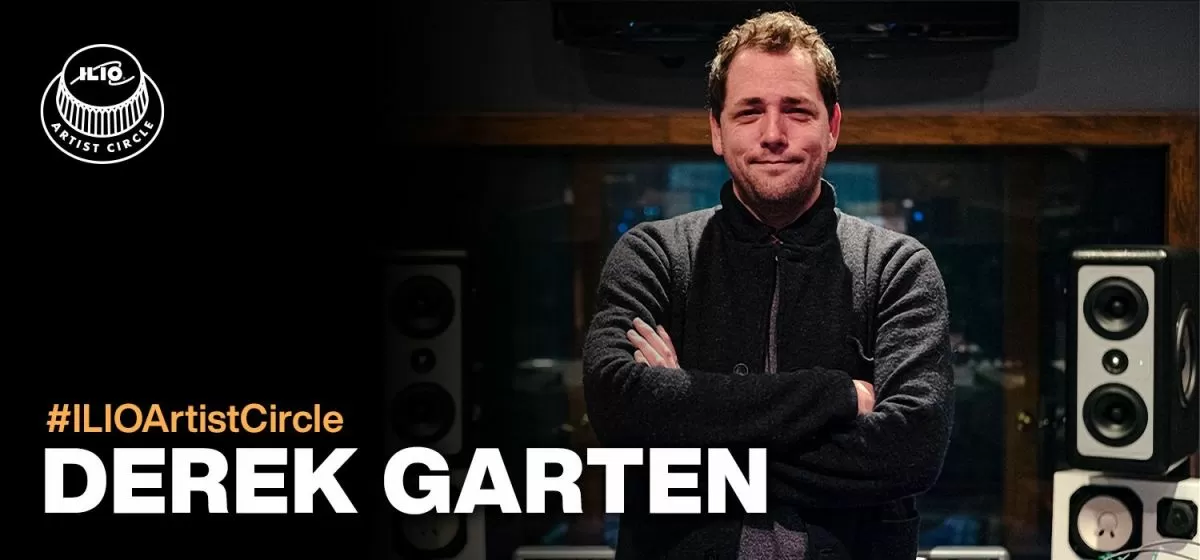
With a career path that went from recording his high school band direct to 2-track tape to now working with artists like Taylor Swift and Jewel, Derek Garten is an example for all of us that showing up and always giving it your all can pay dividends in the long run.
A Nashville studio owner who has seen the recording industry change, and has ridden the technological revolution, Garten shared many insights and experiences with us in our long-ranging discussion. Let’s dig in!
Making Do With Limited Gear
Derek started playing guitar in a high school punk rock band, and set up a very basic recording situation (he is loath to call it a home studio) in his third-floor bedroom. Using some cheap mics run into a 16-channel mixer, he recorded directly to a stereo DAT recorder his dad had brought home from Japan. He recalls, “I put the band in the bedroom next to my bedroom, which was my little live space, so to speak. And I would record them straight from the mixer into the DAT in real time. They would play the song start to finish: I couldn’t punch in or anything like that. I couldn't even mix it because it was just straight to two tracks. So that was like the early days of recording where there's no overdubbing, it just is what it is.”
“Over time I was recording more and more of the local high school bands in my area. I was charging I think 30 bucks an hour. One of the first people I started recording in my third-floor setup was Michael League, who later started Snarky Puppy – we went to high school together. At the time, he was the most talented musician I'd ever worked with.”
Over time I was recording more and more of the local high school bands in my area. I was charging I think 30 bucks an hour.
“And that evolved as high school went on. I eventually got a BOSS digital eight-track: it still only had stereo inputs, and it recorded to ZIP disks, remember those? But I now had more than two tracks, although I still had to premix my drums in stereo to go into the recording device. I ended up buying a 100-foot 16 channel snake, so I could set the mixer up in my bedroom and run the snake down across the hallway to the other room. I had so little equipment – just enough to do damage.”
Reflecting back on that time, Derek summed things up: “I definitely learned a lot in that early stage. I was working with what I had, limitations and all. I was very driven, and I didn’t know it could be any different or better so I just went for it.”
I was working with what I had, limitations and all.
Finding His Way
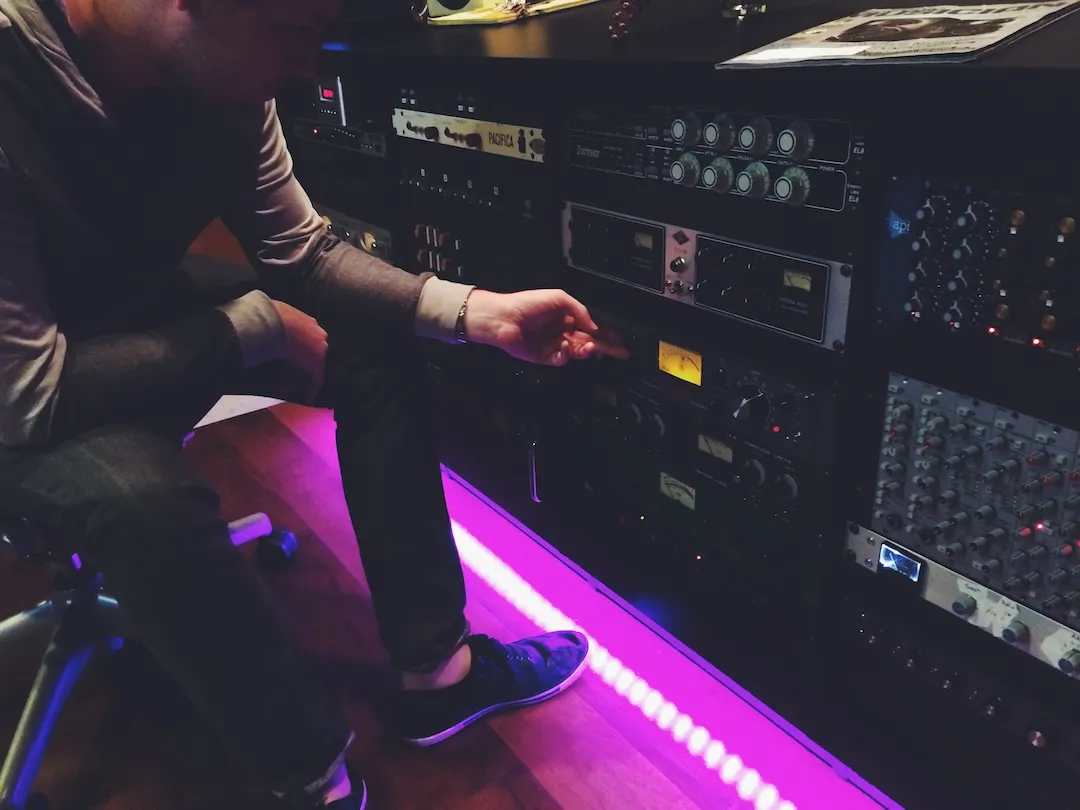
After high school Derek drifted for a bit, taking some general ed community college classes, but with no clear path forward. His local school had one class that caught his interest, a basic recording class, taught by an engineer who worked for NPR Studio in Washington. This teacher, Chris Nelson, made him aware that there could be a career in recording, which was an epiphany for Garten. “I didn't even know this was a profession. I mean, I knew I made some money doing it, but I didn't know that Nashville existed. I didn't know there was an entire industry here. There was no YouTube, there was no Mix magazine.” With a grade point average that initially precluded his ability to get into Middle Tennessee State University (MTSU), where Chris Nelson graduated, Derek took another approach. “I immediately started emailing recording studios in Nashville. I didn’t know what an internship was; I just wanted to be in the studio. I remember emailing Emerald Sound Studios, which was later bought by Masterfonics Recording. Emerald had been around for a long time in the business; so many hit records had been done there.” Derek took summer classes and improved his grades to be able to attend MTSU while pursuing his internship.
During the internship, Derek found out that he wouldn’t be getting paid, nor would he be earning any school credits. “I showed up about three to four days a week for two years, just because I loved being in the environment,” Derek reminisces. “I loved meeting people. And I knew this was the way forward for me. Sure, there was plenty of sitting around watching the phone, the door. But I learned a lot about the importance of the setup, and the workflow of how studios operate. Best of all, I'm getting to watch guys like Dan Huff, Justin Niebank, Jeff Balding, Chuck Ainlay; all of these guys were working out of the rooms that I'm interning at. I was getting to know the people that later on, would change my life.”
I loved being in the environment. I loved meeting people. And I knew this was the way forward for me.
Summing it up, Garten offers this perspective, “There's something about getting out of your hometown, being in the environment, and meeting the people that become your peers in your industry over the next 10 or 15 years that is almost priceless.”
I was getting to know the people that later on would change my life.
The internship turned into full-time employment, and Derek continued to hone his craft until the downturn in the industry (starting around 2007) eventually forced the studio to close. Derek vowed to never work for someone else again. As he puts it, “I wanted my own input to be responsible for my output.”
Connections Start To Pay Off
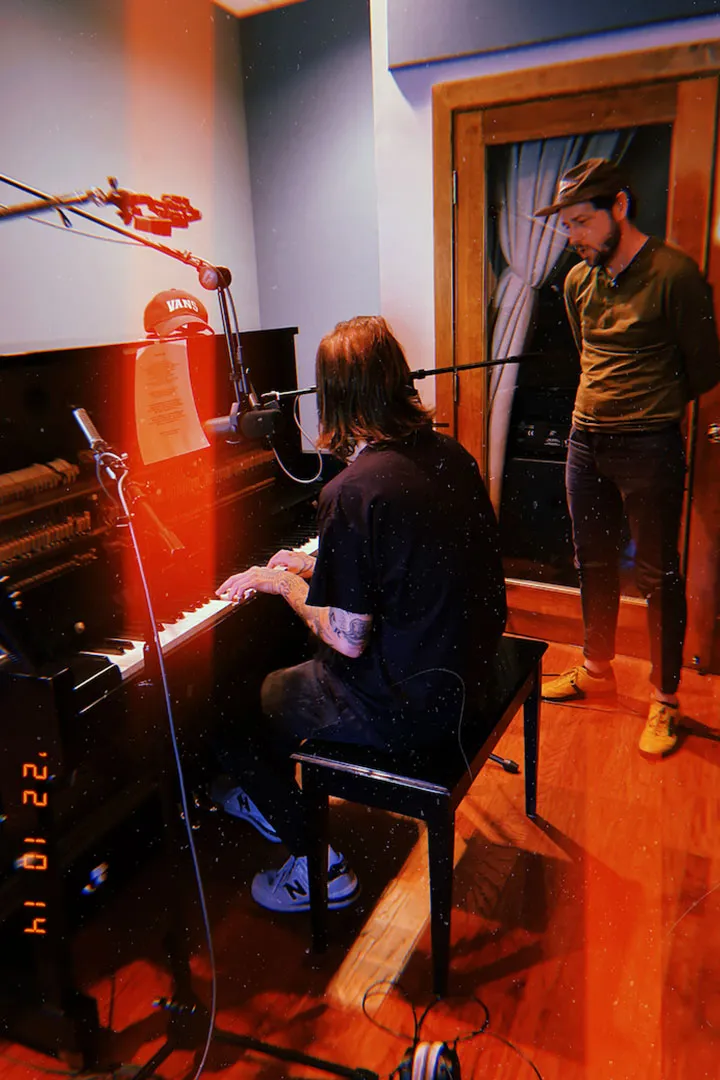
Going out on his own, Garten picked up work as he could, and relates that having made connections during his tenure at Emerald coupled with his “do what it takes” attitude helped his journey. He shares a story: “I got a chance to work with a legendary producer (worked with Bob Dylan, Willie Nelson and scores of others) as the assistant engineer. I’ll just say that he was known for being a bit… difficult. We were booked for a mix session, in a room designed only for mixing. He and the main engineer just met that day, and he tells us that he wants to do some vocal tracking. So I dove in, setting up the mics, getting everything going. And we proceeded to spend the next half a day doing vocal overdubs with no vocal booth or even an overdub room, and wrapped up the session. Then the producer asked the engineer about working the next day, who basically said he’s not coming back. He turned to me and says, ‘what about you, are you an engineer?’ I said, ‘Yeah, that's why I'm here.’ ‘Well, you can do it.’ So I come in the next day and did a mix recall, even though I had little experience on the SSL consoles at this point.”
“That was an interesting day and a half of work; I have a lot of stories like that. You never knew what was going to happen in those days, because people were always coming and going out of the studios. And you were always in the middle of something, and maybe one day someone doesn't show up to work, and you’ve got to jump in the seat and go.”
Garten shares another “connection leads to opportunity” story.
Well, my brain said no, but my mouth said yes.
“During my internship at Emerald Sound Studios I met Christopher Rowe, who was a staff audio engineer. Fast forward to 2009, and I get a phone call from him: ‘Do you want to go out to Texas and work on some demos with Jewel?’ Well, my brain said no, but my mouth said yes. It was mostly anxiety – Jewel had sold 20 something million records at that point in her career. I spent a week with her, we worked well together, and she had me come back a couple times. We were doing these acoustic vocal demos, and down the road she ended up having Nathan Chapman produce the full record for her based on those demos. But she really loved the work we created together, so she had me clean them up and remix it. She first released the fully produced album, which was called Sweet and Wild, and then for the deluxe version she included our tracks, which she called Sweet and Mild. And that was one of my first major label credits where I'm listed as mix engineer. Just be involved in the project for me, was a feeling like, ‘Wow, okay, this is a real credit.’”
“It all happened because Chris, who was one of her engineers at the time, couldn't be out there because he was busy for something else. He’s told me, ‘If I can't be there, you're one of the few people I could trust in my place.’ Once again, that opportunity comes around where someone can't make it, and you get called into the game. And then when it came to him working on producing Taylor's Versions, he asked if I wanted to be part of the process. I ended up engineering those records with my old college roommate, Dave Payne, who's her front of house engineer. Looking back now, it was an interesting course of events, and I can see where all of these different things started, and how they've come together at this point.”
Once again, that opportunity comes around where someone can't make it, and you get called into the game.
Finding The Perfect Space
Derek has stories for days, but our conversation moved to the studio that he and his partner opened in 2012. He traces the steps: “As I mentioned earlier, back in 2008 the big studios were closing, and I went off to start working on my own. I was looking for a recording studio to work out of for a band project I had, and I contacted somebody I interned with at Emerald. His name is Josh Keith, and he is my current business partner today with Prime Recording. At the time, he had started Prime in a bedroom at his house. It was a great little setup, and he let me use it to make the record basically for free. We developed a great friendship through it. I get that record done, and I'm looking for a real studio now. I got connected to a guy named Robb Earls, who later owned Sound Vortex recording in Nashville. But back then Robb had a studio in his basement, and I'm talking a legit studio with a console, 24-track tape machine – he was one of the first guys in the late 80s/early 90s to have a 24-track at home where people could take their tapes from the big expensive studio they just recorded at, and afford to go into a small studio and do vocals. He was ahead of the curve at that: perfect for the indie clients and projects. He let me set up shop there for a few years. And we had a really great situation going where I was bringing in bands, and I split him in on the income stream.”
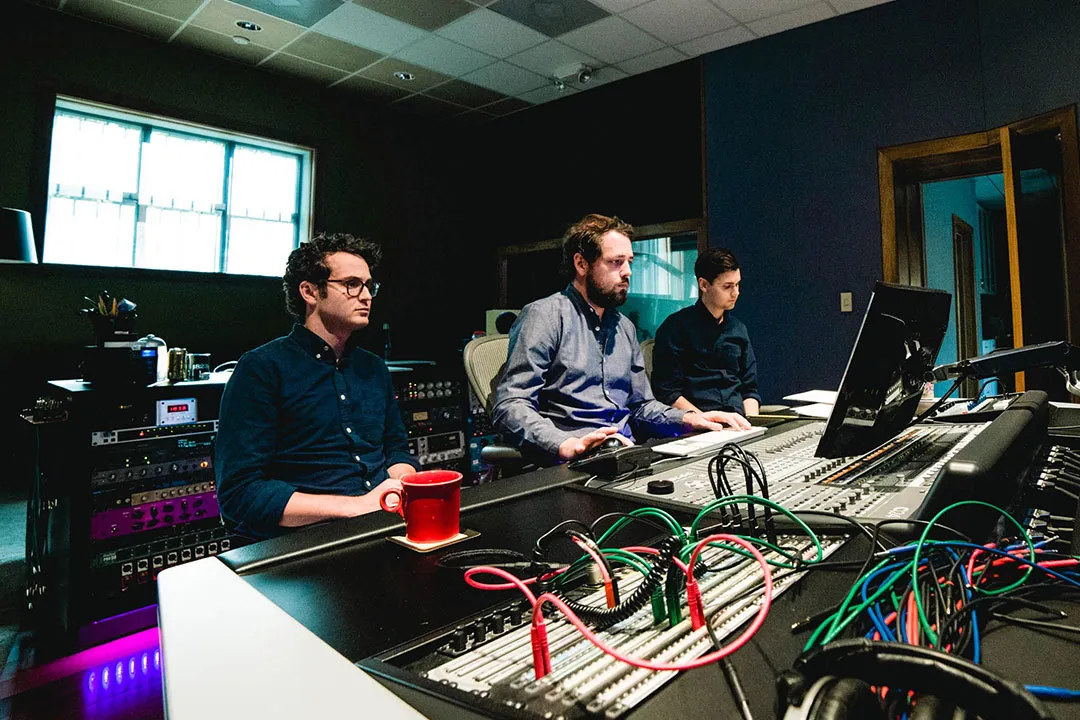
“And then in 2011 Josh and I acquired this building, and started to work on rehabbing and cleaning it up, trying to turn it into something magical. We kicked off officially as a full-time business (Prime Recording) in 2012. This place is a complete dream, it blew everything else out of the water as far as a room goes. it's not a massive room but it's very tight and dry, and has a really great sound to it. Michael Cronin did some of the bass trapping and design work for the acoustics. The other big thing was that it has windows, which most studios I came from did not. We actually have a lot of natural light that pours in into all the different parts of the building. It's probably a couple thousand square feet; it was originally designed to be two separate overdub rooms and two separate control rooms by the previous owner, but we changed that and made the big unfinished room into a drum room where we track drums, bass guitar, and then our ISO booth is where keyboards and piano and Leslie are set up. We also have a bigger space where we can fit a whole band when needed. it's a very cool space, with a bit of a vintage vibe: 1950s cool countertops with a vintage looking refrigerator, and our different colors, fabrics… all that kind of stuff.”
Here is a look into Derek's studio from Andrew Masters' YouTube channel:
The Nashville Sound
Garten addressed what a lot of clients ask him for: the Nashville Sound. “I don't know anyone here in town who calls it that”, he offered. “I guess we just call it work. To me the Nashville sound is that high level of musician that can jump in a situation, and in a very cool manner listen to the tune and then nail it in one take. It's the caliber of what we do here.”
To me the Nashville sound is that high level of musician that can jump in a situation, and in a very cool manner listen to the tune and then nail it in one take.
“Let me describe how things go down here,” he continues. “When I'm working with a Nashville session band, they’re based on union scale and rates and such. We’ll have a 10 am, a 2 pm, and a 6 pm session. We start a downbeat at 10 am on a session, and they might get here between 9:15-9:30. I've got ten minutes max to get drum sounds, and I've got about five minutes to get everybody else. So everyone who’s booked has already shown up with their gear, and their rigs just sound like a record. And they bring the musicianship to that level as well. We'll sit here and listen to a song go down: maybe it’s an acoustic vocal work tape, and the leader will chart the song out in the Nashville number system, which is our shorthand for the chords. They'll hear it in that one pass, and then they'll all go sit at their instruments and start jamming. Shortly, the singer gets on the mic, ‘alright, let’s cut one.’ In real time the song goes from an acoustical thought to a fully produced project. You're hearing maybe six musicians playing live; you’ve got drums, bass, maybe electric and acoustic guitars, pedal steel, and keyboard, and in the first pass, ‘okay, there's the vibe.’ Take two they nail it. They get their fixes done in a matter of minutes, if any are even needed. They know exactly where they messed up, we're not listening back to find those spots, which to me was the biggest change. If you work in Nashville, and you work at the high caliber that we all do, you have it in you – that level of professionalism and quality.”
If you work in Nashville, and you work at the high caliber that we all do, you have it in you—that level of professionalism and quality.
Technology Insights
We asked Derek how technology has played a role in his work, and how that has changed over the years.
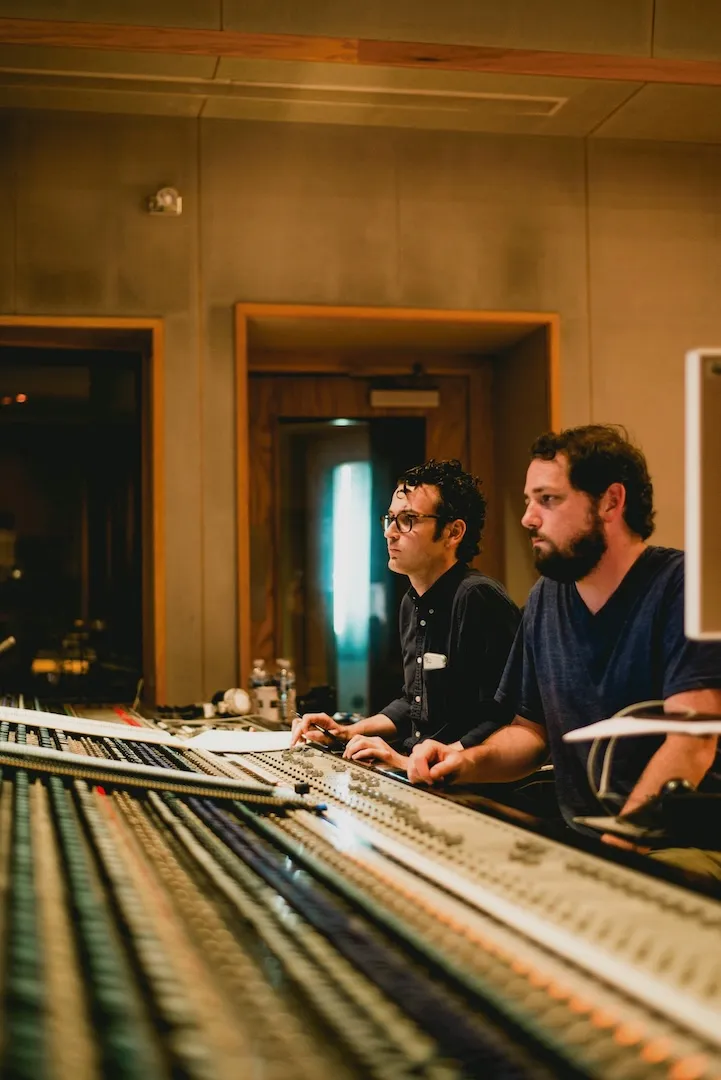
“I think accessibility to tools is the biggest one, and probably the most obvious,” answered Garten. “When I started in Nashville we still were cutting on analog tape machines, then came digital audio tape, and then Pro Tools. I think I started on Pro Tools version five, and it had a lot of limitations back then. You could record, but plug-ins weren't really common yet. Fast forward to today – anything is possible. Being able to work in the box allows me to keep things efficient, but collaborative.”
“Thanks to the technology, the role of the audio engineer has changed dramatically. It used to be you had three roles. There's the assistant audio engineer, who was responsible for setting everything up and maybe operating the tape machine. You had the main audio engineer who's responsible for tracking and overdub sessions. From there it would go to a mix engineer. His sole focus was mixing to the guide like he's going to master the project. Now, working with the tools and technology we have today, everyone can do it all. I'm watching guys who used to be tracking engineers, now they're mixing and they're producing and writing music: they're doing so many things that didn’t happen back in the day. Myself included.”
“What is a really big change,” Derek asserts, “is now when I'm on a session, I look over at the keyboard player, he's got a laptop, he's got his favorite keyboard/controller, and he's got Keyscape, he's got Omnisphere, he's got Stylus; because they sound great right out of the box. When you deal with someone who’s got a setup like that, he's just handing me left and right. Often, I don't even use a mic pre or any sort of channel strip – I'm relying on his sound. And I've used a fair amount of keyboard libraries in my career… Keyscape is the most dialed in, out of the box ready to go. It just works.”
I've used a fair amount of keyboard libraries in my career… Keyscape is the most dialed in, out of the box ready to go. It just works.
Continuing to discuss software, Garten recalls, “My partner Josh got Omnisphere around 2008 when it was a brand-new product. And I remember with that first band we worked on in his house together; the band wanted an orchestral sound. We used the Sad Strings patch in combination with real string players to create this really beautiful soundscape. It was a lot of the session players who introduced me to Keyscape. I'd be doing tracking sessions here, and at the time we didn't have a piano. So the guys coming in would bring in their rigs, and nine times out of ten I would ask ‘what is that keyboard sound?’ And it usually was Keyscape, the LA Custom C7 piano. Now one of my favorite pianos in the entire world is a Yamaha C7. In fact, at Masterfonics Trackingroom they built this one room around their C7 grand, and I would sit there late at night, with my eyes closed, and just play that piano. And the sound of it in my head is what that LA Custom C7 captures. I know this stuff's been on countless records, including some of the biggest records I've worked on, so it's bled its way into my career over the last several years, in different ways. It's become an indispensable tool for sure.”
I know this (Keyscape) stuff's been on countless records, including some of the biggest records I've worked on.
“One more thing,” Derek enthuses. “The Flow Capture function is such a game changer for me. So many recent ideas have been me sitting here for an hour at the beginning of my workday, making music for myself. I'll have Flow Capture on and I'll just start feeling out stuff. As soon as you hit stop, it's like ‘where do you want to save this beautiful information you just played?’ You don't even think about it, it's just there in the background. Now compare that to if I've got to open up Pro Tools… that takes five minutes. Then I’ve got to open up a new session, I’ve got to create a track or open my template, and it's seven steps later before I can start to play. Or I can open up Keyscape, hit Flow Capture and just play. I think it's such an amazing feature. Love it.”
I can open up Keyscape, hit Flow Capture and just play. I think it's such an amazing feature. Love it.
Looking Forward
We asked Derek about the future of music and technology, and he had an interesting viewpoint. “Well, I think it's hard to tell where things are going, because we're in the midst of it – we're literally in the car with all the technology and newness happening in real time. So the question is, ‘where do we want it to go?’ I'm seeing a lot of debates about AI, and what that technology is doing within our own industry. How it will affect us as artists, creators, and writers. One positive aspect to me, is it has the potential to… you know how long it takes sometimes searching for a patch in a virtual instrument? if I were able to type in an emotion, or a feeling, or a thought in a more complex way to describe the sound I want, and it would present me seven possible options that were just right on the money out of the gate, I think that that would be something that speeds up the workflow process and the creativity. That's my hope for it.”
Offering some advice about what it takes to be in the music biz, Garten shared these thoughts. “I remember my (future) wife and I were talking about what we wanted to do when we graduated from college, etc., and I said I wanted to work with the biggest artists in the music business. So I was very driven, very into it, and just wanted to do it. I've heard this in a lot of books I've been reading: becoming friends with failure is one of the most important things you can do. Because if you're friends with failure, it means you're doing it, you're trying. I've had a lot of losses, and I've had a lot of wins, but you can't have those wins without having experienced losing sometimes. You gotta put something down, try something and see if it works. And if it doesn't work, keep going. It’s funny, a lot of people ask, ‘did you have a plan B?’ I was like, ‘No, and I didn't even know this was a plan.’ It just happened along the way.”
Becoming friends with failure is one of the most important things you can do. Because if you're friends with failure, it means you're doing it, you're trying.
Summing things up, Derek offered, “To me, engineering is often taking something and improving upon it. I think as audio engineers we sometimes get flack for not being real, quote, unquote, engineers in the sense of a traditional study. But we problem solve… we think in real time: how do we make this sound better? How do we make this more comfortable? How do we make this performer feel more at home? We're always trying to improve. Never lose that passion and care for what you do.”
For more info on Derek Garten, visit here.