
Producer, synthesist, musician and author Jason Miles came of age during the fertile late 60s and 70s, a time when music, technology and society were going through huge changes. Becoming part of the New York music scene he made connections that brought him into the world of recording albums when budgets were plentiful, and he was part of many huge hits for artists like Miles Davis, Luther Vandross, Whitney Houston, Chaka Khan, David Sanborn, Gato Barbieri and many others.
The skills he developed as a synth programmer and soon-to-be producer enabled him to pivot when the recording industry all-but collapsed, and he has produced a wide range of projects that showcase his love of deep grooves, Miles Davis-influenced electric jazz, Brazilian music, and so much more. He won a Grammy (Best Male Pop Vocal - Sting) for the tune “She Walks This Earth” from his A Love Affair, The Music of Ivan Lins,” along with a best Pop Instrumental nomination for the tune “Chasing Shadows,” featuring Herb Alpert.
Now 50 years into his career Jason continues to make new music, and he shares his experiences via his book The Extraordinary Journey of Jason Miles…A Musical Biography. A second book is in the works, and he has just released a new collection of sounds for the Sequential/Oberheim OB-6 that is distributed by ILIO called Jason Miles 100 Ultimate OB-6 Patches. We chatted with Jason from his home in Portugal about his roots; what it was like in those heady days in the 70s, 80s and 90s; and where his path has taken him. Enjoy his story and his many insights.
Here is track from the career re-defining Tutu album from Miles Davis with synthesizer programming from Jason Miles:
Brooklyn Roots
Jason first got interested in music at the age of six, when he sat next to the drummer at a family wedding. Not willing to let drums into their house, his folks chose to get him an accordion (a common first step in music-making for many keyboardists from that era), and lessons soon followed.
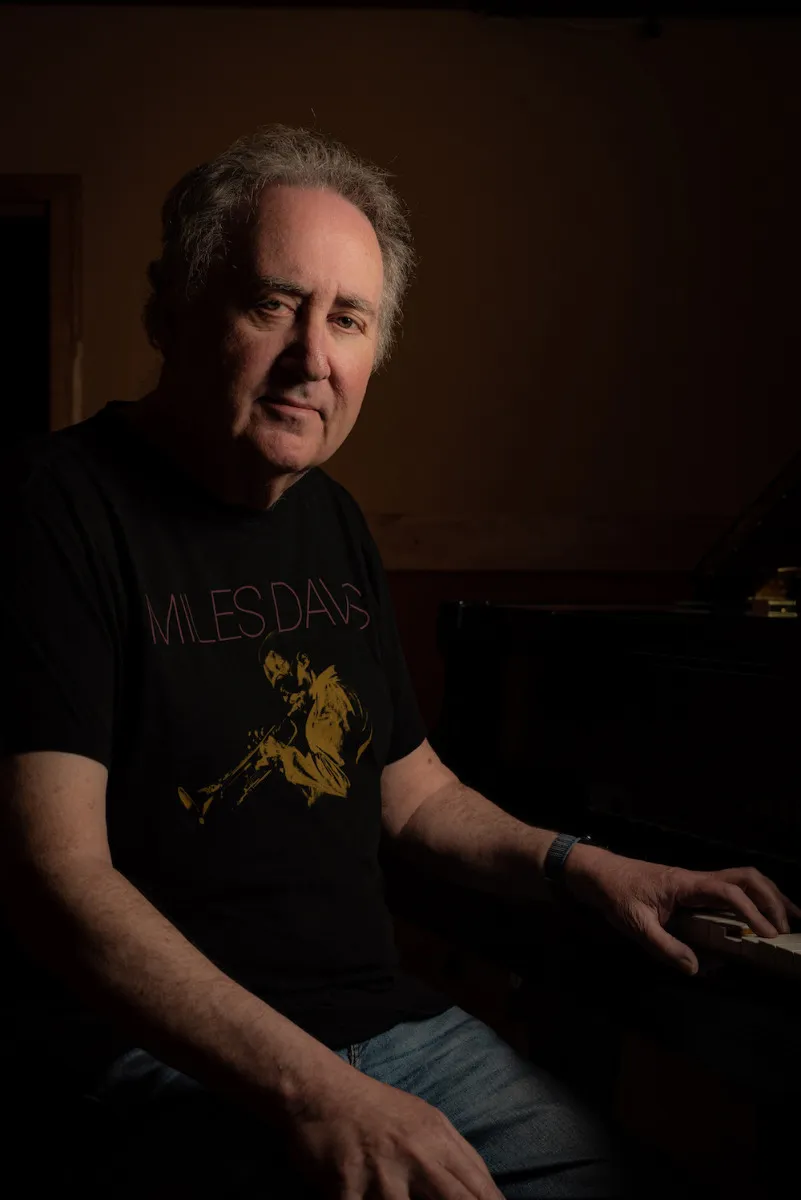
Jason’s skills developed, and he was playing recitals and small concerts when, at the age of twelve, he first heard some jazz music on TV. Jason really connected with the music and decided he wanted to play an instrument that was more common in jazz, so he moved to piano, studying both classical and jazz.
Miles started playing in bands, doing dances and parties. He used the money he made to go see shows at the Fillmore East in NYC, where he got turned on to bands like The Paul Butterfield Blues Band, The Nice (with Keith Emerson) and others. After high school his parents wanted him to go into a “safe” career, and he ended up going to Indiana State University for English. While he was studying there, he kept up his piano studies by learning from albums. Hearing In A Silent Way and then Bitches Brew by Miles Davis pointed the way to new musical avenues for the young Jason Miles. What followed next was a fateful meeting that set the course of his career for decades to come. Jason recounts it for us:
“I was walking past a music hall one day, and I heard this sound: the walls were shaking. I walked in, and there’s this cat sitting on stage working with some piece of electronics. I walk up and I ask, ‘Wow, what is that?’ ‘Well, that's the instrument that I invented.’ ‘What is it called?’ ‘It’s called the Minimoog. My name is Robert Moog, why don’t you try it out.’ And this thing was incredible – I loved it.”
From there, Miles started listening to the burgeoning fusion movement in jazz, spearheaded by Chick Corea and Return To Forever, Herbie Hancock and the Headhunters, and Weather Report. Jason was hooked on the sound of electric keyboards, specifically synthesizers and the Fender Rhodes piano.
It’s called the Minimoog. My name is Robert Moog, why don’t you try it out.
Making The Scene In NYC
Finishing college, he returned to NYC and started checking out the music scene. He would meet musicians, and when he said he was interested in electronic keyboards and synths he would be told that he wasn’t going to find any work using those types of instruments. Undaunted, Jason continued in his quest, fueled by the music that Joe Zawinul and Weather Report were making, amongst others.

One day, a friend called him to say that Weather Report was playing in a small club out in New Jersey. They drove out only to find a large disco bar, full of singles action. But sure enough, the band’s gear was onstage, and at 11 PM Weather Report hits the stage and… the club empties out! Jason and his friends stayed and were treated to an amazing set by the band. Hanging around after the show he met percussionist Dom Um Romao and praised the band’s set, but Romao was only interested in one thing. Did Jason have anything to smoke? He did, and that gained him entry backstage where he got to strike up a conversation with Zawinul, who was surprised when Miles asked questions and was obviously knowledgeable about the gear. Thus began a decades-long friendship, and Jason was able to help Joe when he introduced him to his neighbor (the inventor of Mutron pedal effects), and set him up with the legendary Mutron Bi-Phase that became a major part of Zawinul’s famed electric piano sound.
Dom Um Romao started bringing Jason around to sessions and gigs, and this enabled Miles to meet a lot of New York’s best musicians. He was making connections, but still felt he wasn’t quite ready, so he continued to study, taking both jazz and classical piano lessons. He met keyboardist Mike Mandel (Larry Coryell and the Eleventh House) who started giving Jason synthesis lessons, since they both owned ARP Odyssey synths. Time went by, and Jason started playing with some bands in the area, and when he got a gig with Teruo Nakamura and the Rising Sun band he started playing the better clubs and getting noticed more.
Becoming a Session Musician
Jason credits his first entry into studio programming to a call he got from keyboardist Kenny Kirkland. Kirkland was doing a record date and was asked to also play synths. He told Jason, “I can play them, but I don’t know how to use them. Can you bring down some keyboards and I’ll pay you $500 to run them? You’re bad man. You know how to do this.” Miles did the session and drew attention from the team and the studio.
Kenny Kirkland: “You’re bad man. You know how to do this."
He started getting more work, and after a couple of sessions that sax player Michael Brecker was on they formed a friendship, and Brecker started recommending Jason around town. A chance meeting with drummer Lennie White, and their bonding over producer Trevor Horn (Art Of Noise) led to Jason being called by bassist and fledgling producer Marcus Miller to work on his new project with White, The Jamaica Boys. Miles was finally gaining entry into the world of NYC recording studios.
Jason and Marcus hit it off musically, and they embarked on a decade-long career together, during which they did albums with some of the top artists in jazz, R&B and eventually pop. Most well-known is their work with Miles Davis on his career re-defining Tutu album, followed by Amandala and Siesta. Albums with David Sanborn, George Benson/Earl Klugh, and The Crusaders, along with a number of chart-topping albums with Luther Vandross are but some of the highlights of their work together.
Here is a track from the album Give Me The Reason by Luther Vandross with synthesizer programming from Jason Miles:
Talking about working together with Miller Jason shared, “When you work with Marcus, you got to let Marcus play. Because he hears the stuff differently. But I understood how he worked, and knew how to create the sound for what he was going for. And we ended up creating this symmetry – we were freakin’ ninjas!”
I understood how he worked, and knew how to create the sound for what he was going for. And we ended up creating this symmetry – we were freakin’ ninjas!
Here is the title track from the Whitney Houston album I'm Your Baby Tonight with synthesizer programming from Jason Miles:
Lessons Learned
Throughout the apex years of his session work, Jason listened, observed and learned how the top producers, engineers and players worked. When asked for some lessons learned he offered: “At the end of the day, I think it's all about the development of your ear. I was in the studio, and Deodato was next door doing Kool and the Gang. It was sounding great, and I asked him, ‘How do you get to that place?’ He points to his ear, and said, ‘When it’s right, you'll know.’ “
“I’ve been on some sessions where the artist was learning the tune, running it down a few times and they sounded terrible. What should you do? Well, the best producers don’t get freaked out, they keep the environment cool, and give them time. Then often, we would do a take and it came out amazing. So don’t get frustrated. And even when it wasn't working for some musicians on my sessions, and I knew it, I never stop. If I don't like what somebody's doing, they're gonna finish the song, and they're gonna get paid. I may not use it. But I will never make things uncomfortable for them at the session.”
So I learned: don't put any pressure on them. Let them go. And when they're ready, they're ready.
“You want to make the environment comfortable – that’s when you're going to get the best performance. When they first come in, I’ll say, ‘I’m really glad you’re here – this is gonna be cool.’ I show them the chart, let them listen to the tune, and when they ask me ‘What should I do?’ I might say ‘I have a couple of things I want you to pay attention to,’ but beyond that I would always ask them, ‘Do you have any ideas?’ Bring them into the process a little more. That’s why you hired them, for their skills, personality and attitude.”
You want to make the environment comfortable – that’s when you're going to get the best performance.
You want to learn something? Here's a lesson for musicians. Don't spend all your f***ing money! Start putting money in an S&P Index Fund, so when you're 50 you're not gonna be, ’What are we're gonna do?’ You learn that most every career has an arc, and the best of times won’t last forever.”
Gear Talk
After his earliest years with his ARP Odyssey and Prophet-5, Jason got into using the Oberheim System (OB-X/Xa synth, the DMX drum machine and the DSX sequencer), the DX7, then adding the PPG and an Emulator II. Over time he added a TX816 rack, and changed out the Oberheim System for the Matrix-12, and started using the Linn 9000 for his sequencer. As the years progressed and technology moved forward he was always there, using and mastering the latest gear.
As an example, Jason recalled,” The Roland D-50 came out while I was working with Miles Davis, and I really stretched it out beyond the presets that everyone else was using. Listen to Amandala, it’s all over that. With every album we did, new things were coming out with new possibilities.”
Jason would have his gear set up in the studio, all MIDI’d together. But he didn’t just layer a bunch of things together, he thought through what a sound needed, and used each synth to add just the needed element, be it an attack characteristic, or some colorful movement. “My thing was I knew how to layer that s***. I knew how to create different sounds on different keyboards, and then put them together. I think that was part of my magic back then – I knew what each instrument did well.”
I think it was most important to understand what these instruments did, what their strong point was, and what the difference was.
Jason Miles 100 Ultimate OB-6 Patches
Asked what drew him to Oberheim synths Jason was quick to answer, “That 2- pole filter. That was the Oberheim sound. Oberheims had that crunchy thing, and being able to spread the voices out and create that really cool, lush stereo stuff. Later I moved to the Matrix 12, which was brilliant, and I used it on so many albums. Fast forward to today, when I heard about the OB-6, I saw the combination of what Dave (Smith) brought to it, and what Tom (Oberheim) brought to it, and it was this beautiful hybrid of each of their sonic strengths. The OB-6 is a magic instrument.”
“For Jason Miles 100 Ultimate OB-6 Patches, I concentrated on trying to make sounds that were funky, that had a little more funk and groove, which you hear on the bass sounds. They’re very punchy, right in the pocket. I created some cool lead sounds, and some comping sounds so people can play some funky Bernie Worrell kind of grooves. I worked with Bernie and saw how he approached playing keyboards in funk.”
My goal was to create fresh sounds that showcase some of my experience and personality.
“I also did some arpeggios because I really like creating those pulses that you lock up to the track. I wanted to give everybody some more ethereal and some paddy stuff as well. My goal was to create fresh sounds that showcase some of my experience and personality. Look at the documentation – I give little hints about how I see it being used. If you spend time with the sounds, you will find your way. And a little plug, you get a free digital copy of my book, with your purchase of Jason Miles 100 Ultimate OB-6 Patches.”
What The Future Brings
Newly ensconced in his home in Portugal, Miles has a lot of music in the que to be released. “I came here with years of archive material. I’ve got live shows – I’ve got this killer show with Global Noize: Live at the Highline Ballroom. With Meshell Ndegeocello, Christian Scott, myself, Jeff Coffin: a killer band. I’ve got a Celebrating Weather Report live show from the Lake George Jazz Festival. But I also have some unreleased studio records.
The one that’s coming out first is the Unity Funk Project, dedicated to Bernie Worrell. It’s some funky s***, with Nona Hendryx, Jeff Coffin, Jay Rodriguez, Falu: great musicians on that one. Then I have a Brazilian album called Brazilian Love, that’s my follow-up to the Ivan Lins one, with songs by Marcos Valle, Ivan, and Antonio Adolfo. I have unreleased demos that are full productions in their own right, using the baddest cats in NYC back in the ‘80s. Then I have some trio, duo and solo piano recordings. Plus I’ve started doing shows based on my book, where I play a little, and talk about my career. So I have a lot of upcoming irons in the fire.”
I want to take my knowledge and what I lived through, and share that with the world.
Finally, we talked about his online presence and how he shares his perspective and life experiences with the music community at large. “I need to leave the world something. Being there, making those records I learned a lot, and I made a difference. I want to take my knowledge and what I lived through, and share that with the world. From my heart.”
To purchase Jason Miles 100 Ultimate OB-6 Patches, visit here.
For more info on Jason Miles, visit here.