The composer and keyboardist discusses a career spanning jazz, television, and orchestral mock-ups, and explains why SWAM Violin became part of his latest Disney score.
What do you do when a Disney short series needs Hollywood-scale orchestral sound and a solo violin expressive enough to pass for a live player? Kenneth Burgomaster had an answer for the orchestra. The violin was the harder part.
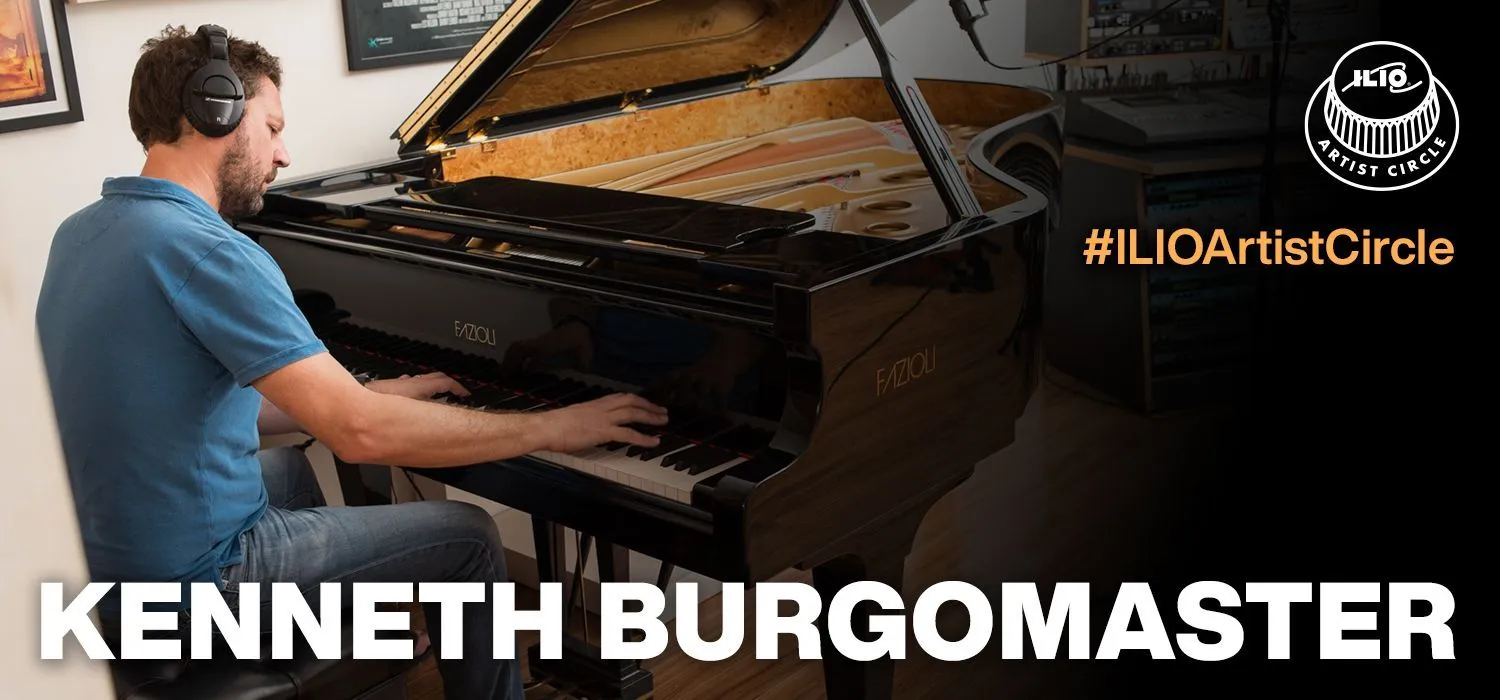
Kenneth Burgomaster has spent much of his career finding practical ways to make music work under real production conditions.
A classically trained pianist and longtime jazz player, he has worked with Herbie Hancock, scored multiple seasons of Power Rangers, created orchestral mock-ups for film composers, and written extensively for Disney. Across those projects, the technology has changed dramatically. His standard for choosing an instrument has not.
It needs to sound right, respond musically, and give him enough control to shape every aspect of the performance, from the quality of the tone to the finer subtleties of phrasing and expression.
That standard recently led Kenneth to Audio Modeling’s SWAM Violin while scoring Disney’s short-form series Locker Diaries: Descendants.
A Full Orchestra, Entirely in the Box
Each episode of Locker Diaries: Descendants runs approximately two to three minutes. Designed for vertical viewing as well as widescreen presentation, the series moves quickly, with music driving much of the action.
“I don’t think we spotted much time in the shows without any music,” Kenneth says. “The whole thing hits you in about two or three minutes.”
The musical expectations were considerably larger than the available production resources. Disney wanted the scale of a full Hollywood orchestra, but the project did not have the budget to record one.
For Kenneth, this was familiar territory. He began producing orchestral mock-ups more than 20 years ago, when studios were increasingly asking composers to demonstrate how a score would sound before committing to a recording session. Over time, those virtual performances moved beyond their original role as previews.
“I’ve been exploring a lot of samples and sample libraries for so many years because it’s no longer just for mocked-up purposes,” he explains. “It’s for the final mix.”
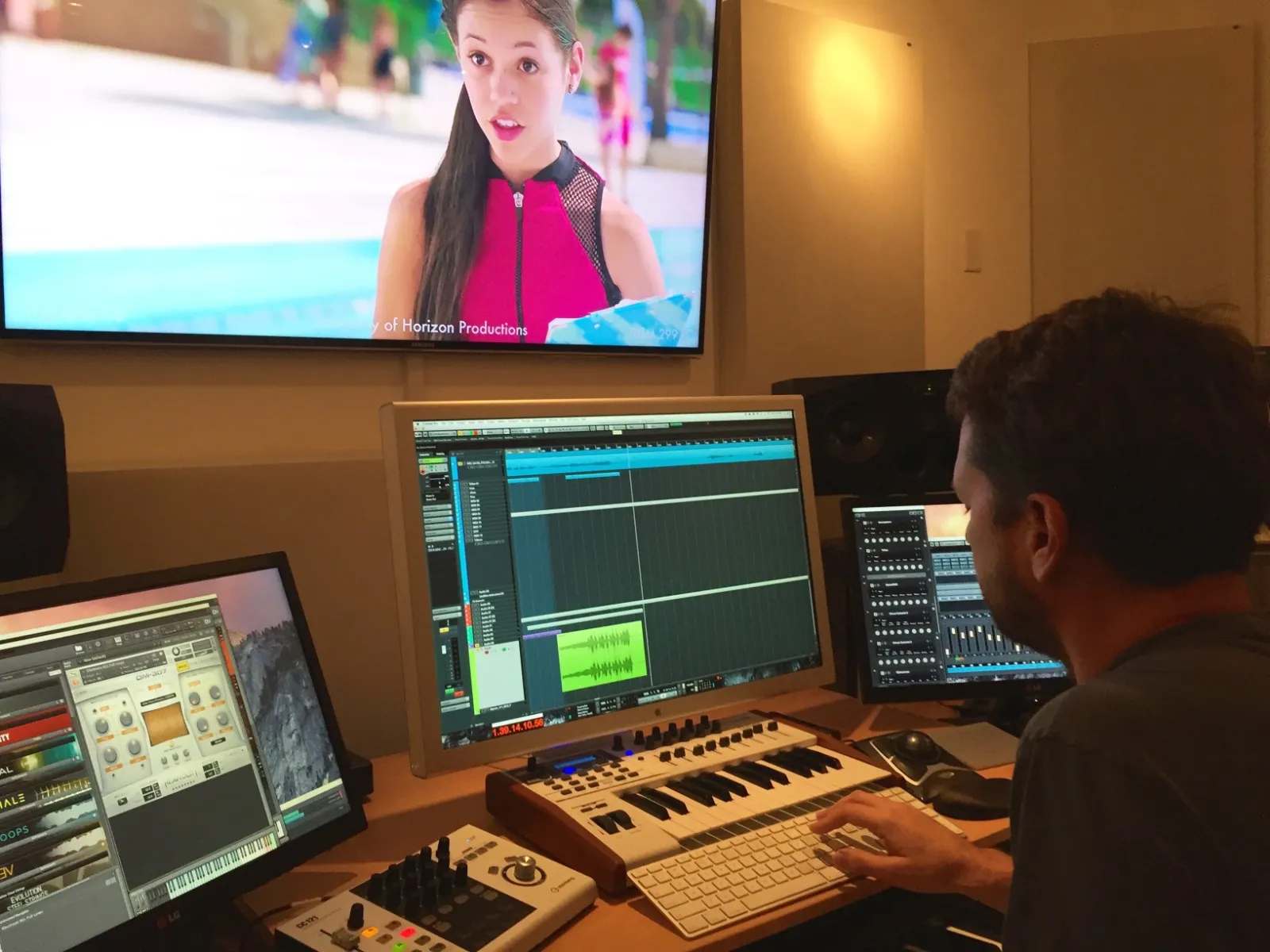
On Locker Diaries: Descendants, there was no live recording session. The entire score would come from Kenneth’s virtual instrument template. Most of the orchestral writing could be handled with sounds he already knew well, but one recurring part required something different.
A Solo Violin That Could Hold Up in the Final Mix
A cat character in the series has a solo violin theme established within the larger Descendants world. The theme only appears in a few episodes, but its exposed position makes the sound especially important.
Kenneth will generally hire a soloist when an instrument carries a substantial role in a film score. However, for a few brief passages spread across two-minute episodes, that approach is difficult to justify financially.
His existing sampled violins were capable of communicating the idea in a mock-up, but he did not think they were convincing enough for the finished score.
The part created a very specific production problem. Kenneth needed the musical presence of a live soloist without the time and cost of arranging a session for several short appearances.
“If I hadn’t found something that really sounded good enough, I may have had to burn some cash and hire somebody,” he says.
SWAM Violin gave him another option.
The Sound Between the Notes
Unlike a traditional sample library, SWAM Violin uses physical modeling to generate its sound in real time. Kenneth noticed the difference as soon as he downloaded it. Instead of the large installation he would expect from a detailed sample library, the instrument occupied only a few megabytes.
The more meaningful difference appeared when he began to play.
Kenneth had worked with many sampled solo instruments over the years. The individual notes could sound excellent, but exposed melodic writing often revealed the sometimes awkward transitions between those notes. Even dedicated legato patches could produce lines in which the mechanics of switching samples were too obvious to be convincing.
“For me, especially in solo instruments, it’s the sound between the notes,” he says. “A lot of samples have legato patches, but they don’t always work properly. Sometimes you can hear the switch between the different samples, and it doesn’t sound totally natural.”
SWAM Violin responded to how Kenneth moved from one note to another. Faster and slower changes produced different transitions, allowing the phrasing to emerge from the performance rather than from a series of articulation choices.
The result surprised him enough that he recorded an impromptu virtuosic passage and sent it to a friend.
“I recorded myself playing some sort of crazy Paganini violin thing and said, ‘Check this out, because it sounds so real.’”
Playing the Instrument Instead of Constructing the Part
In addition to its musicality, Kenneth’s affinity for the SWAM Violin is also connected to how he prefers to work. As a trained pianist, he wants to perform a line from the keyboard rather than assemble it note by note.
“I do like to perform samples,” he says. “I like to perform on the keyboard. I’m not stepping everything in.”
His studio setup includes an expression pedal, MIDI faders, and several compact controllers. For the violin part, however, he relied primarily on the mod wheel. It allowed his left hand to shape the line while he played the notes with his right.
Kenneth had previously tried SWAM instruments at the NAMM Show and remembered having to adapt to using pedals and performance controls. He expected the SWAM Violin might require a similar period of adjustment. Instead, he was able to get a useful performance almost immediately.
That responsiveness mattered because the instrument was not being used as a placeholder. The performance Kenneth played would remain in the completed score. SWAM Violin did not remove the need to perform the part. It gave him a more fluid instrument with which to perform it.
From Classical Piano to Jazz and Scoring
Kenneth grew up as a classical pianist in a musical household. Both of his parents were church organists, but his interests soon expanded into jazz, composition, and technology.
At Kenyon College in Ohio, he studied composition, film composition, jazz, and piano. Because he was part of a relatively small music community, he found opportunities to work across several disciplines.
He wrote for dance concerts and performance-art pieces, played jazz, and performed with a big band in Columbus. In the late 1980s and early 1990s, he and several other students persuaded a composition professor to offer a film-scoring class. Kenneth bought a Korg M1 and began sequencing.
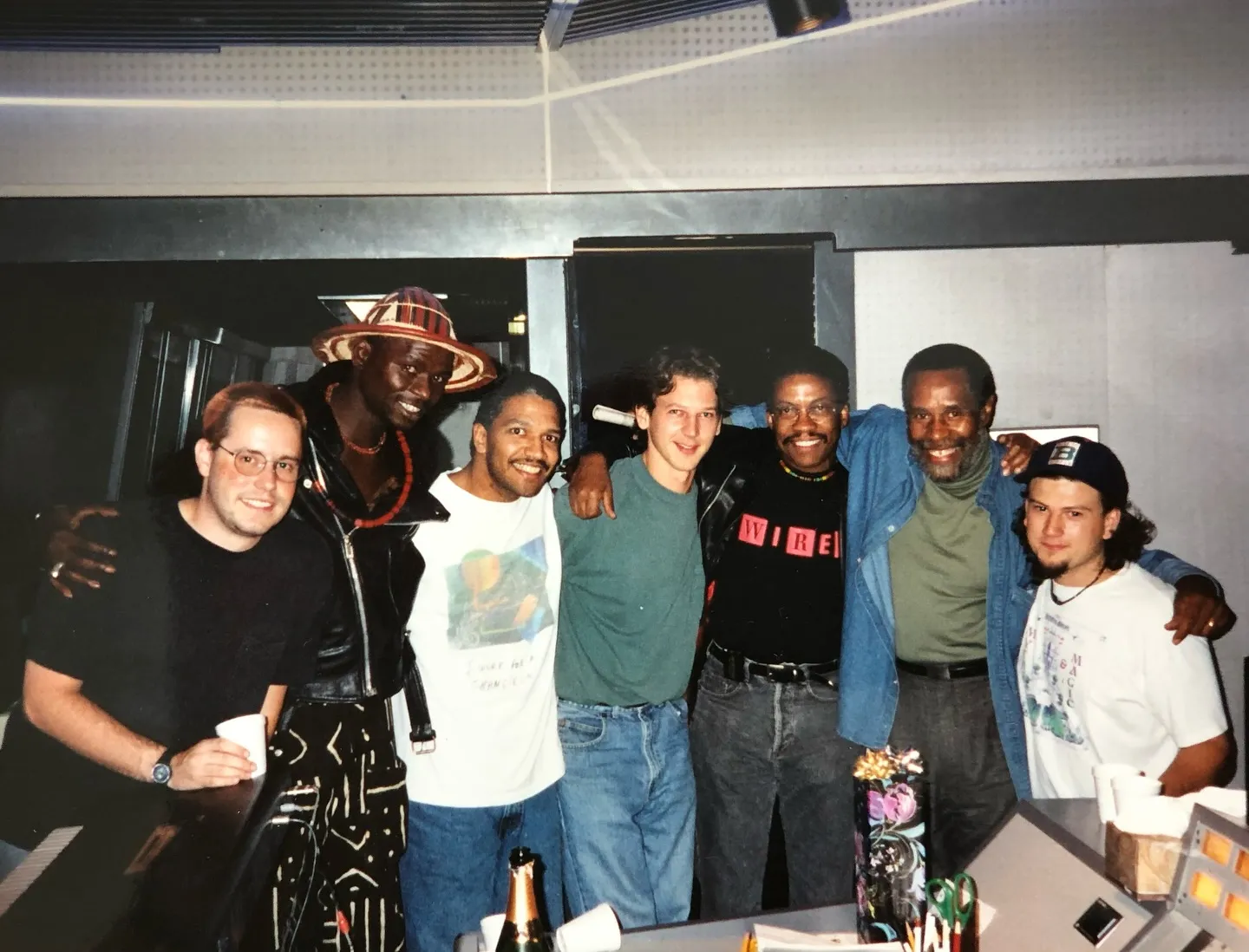
He later attended USC’s graduate jazz program. Although he was officially enrolled for only a semester, the relationships he formed there would shape the next stage of his career. A percussion professor who was playing with Herbie Hancock helped create a connection that led to Kenneth’s working with Hancock over several years.
That experience informs the advice he now gives young musicians moving to a new city. Becoming part of a school or musical community can create relationships that would be difficult to build alone.
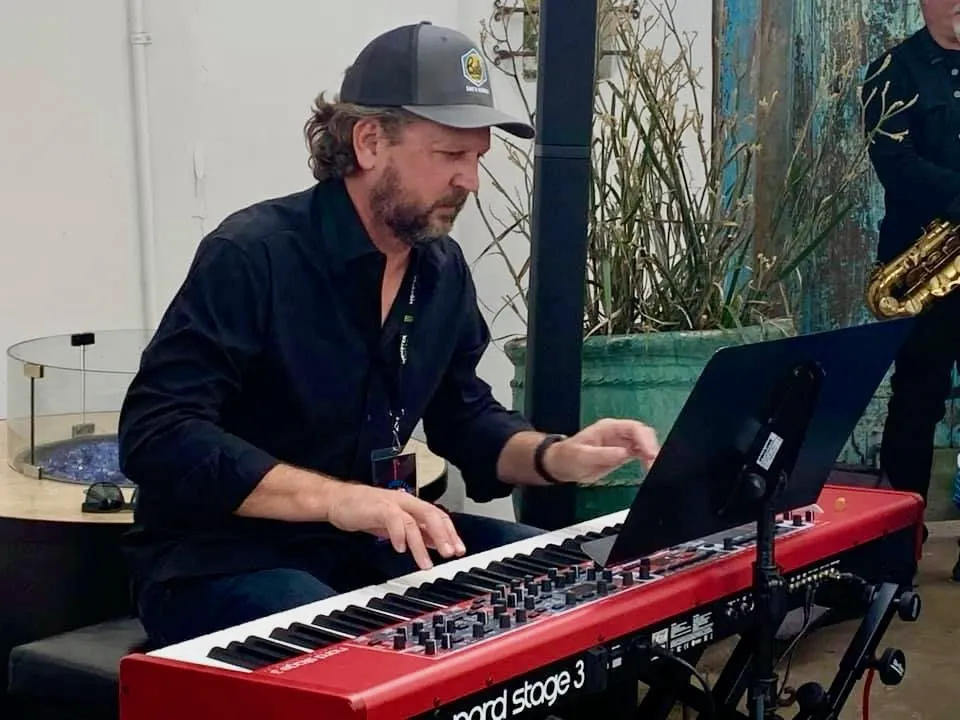
Kenneth has also remained an active performer throughout his scoring career. His band has held a Tuesday-night residency at The Brig in Venice for more than two decades, bringing together musicians from the Los Angeles jazz, fusion, and funk communities.
“I came to LA to get into film and TV scoring,” he says, “but I’ve always been a player, a jazz player, a keyboard player at heart.”
Skill, Luck, and Perseverance
One of Kenneth’s first Los Angeles jobs came from an advertisement for a music librarian at Saban Entertainment, the company producing Power Rangers. He also supervised the tape duplication room.
At the time, copying an hour-long score required an hour-long real-time transfer. Kenneth spent his days managing tapes, but he quickly noticed that the company also maintained several in-house music studios.
“When I started working there, I realized, ‘Oh, they have a lot of in-house studios,’” he recalls. “I thought, ‘Okay, I’m going to end up in one of these studios.’”
After work, he would enter one of the rooms, leave the door open, and play piano. He learned the equipment, became acquainted with the composers and staff, and gradually began ghostwriting and contributing additional music.
When a Power Rangers composer left the series, Kenneth was encouraged to audition. He prepared a demo showing that he understood the show’s combination of synthetic guitar and hybrid orchestral writing, and he got the job.
For Kenneth, persistence did not mean waiting for someone to recognize his ability. It meant getting close to the work, learning the environment, and being prepared when an opening appeared.
“You can’t just sit home and wait for the phone to ring,” he says. “You’ve got to be out there.”
From Kurzweil Samplers to Physical Modeling
The tools used to create Power Rangers were far removed from today’s software instruments. The production relied heavily on rack-mounted Kurzweil K2000 samplers. The show’s distinctive synthetic guitar sound came from a guitar sample in the Kurzweil running through a Korg A3 guitar effects processor.
As Kenneth’s career progressed, his studio moved through E-mu samplers, SCSI drives, Muse Receptors, and several generations of computers. Each step brought more of the composing process into the box.
Still, he never assumed that a newer instrument was automatically better.
While creating orchestral mock-ups for composer Christopher Young, Kenneth learned to choose sounds according to what the music required. If an older clarinet sample sounded more dimensional than a newer library, they used the old clarinet. If an unconvincing part was not essential to a presentation, they muted it rather than allow it to weaken the cue.
“If it sounded good, we would do it,” Kenneth says.
His current template remains a mixture of libraries and instruments collected across different periods. Some older sounds have stayed because they remain playable and continue to work in a mix. New instruments must earn their place by providing something those trusted tools cannot.
SWAM Violin did exactly that. It gave him a solo violin that could move fluidly between notes, respond to his performance, and remain in the final score.
Keeping Control of the Music
Kenneth is curious about the rapidly changing role of artificial intelligence in music, but his interest is tempered by the same concern that shapes his choice of virtual instruments: control.
He sees practical value in tools that help realize a difficult texture or repeated figure. But a prerecorded phrase that supplies an entire musical idea is different.
“The problem with those is that it locks you into using what that little thing is,” he says. “It boxes you in.”
Kenneth wants to decide what the music does, how it develops, and how each phrase is shaped. The technology should help him realize those decisions without making them on his behalf.
That is the thread connecting his early rack samplers, his orchestral mock-up work, and his use of physical modeling today. The equipment has changed, but his judgment remains grounded in performance.
A useful instrument must sound convincing. More importantly, it must let him control the spaces, transitions, and gestures that turn notes into a musical line.
For Kenneth Burgomaster, that is where SWAM Violin made the difference: in the sound between the notes.
Explore SWAM Violin from Audio Modeling.